
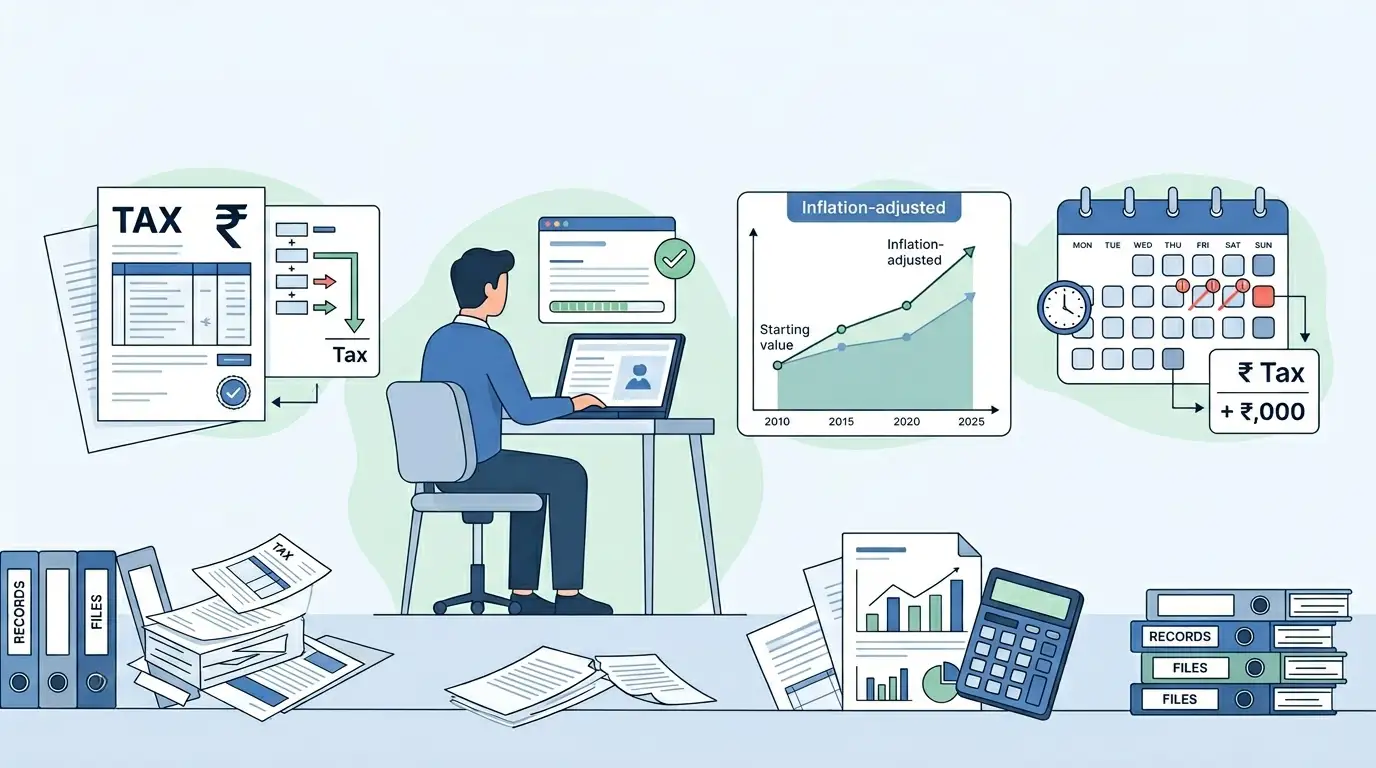
Income Tax Glossary I: Income Tax, ITR, Indexation, Forms
Several important taxation concepts begin with the letter I. This section of the income tax glossary explains commonly used terms such as Income Tax, Income Tax Return (ITR), Indexation, Interest under sections 234A, 234B and 234C in simple language for Indian taxpayers.
Income
Income refers to money or financial gains earned by an individual or entity during a financial year.
Explanation
Income may arise from various activities such as employment, business operations, investments, or property ownership.
Common sources of income include:
salary and wages
business profits
rental income
capital gains
interest or dividend earnings
Income is classified under different heads for taxation purposes.
Income Tax
Income tax is a direct tax imposed by the government on the income earned by individuals, businesses, and other entities.
Explanation
Taxpayers must pay income tax based on their taxable income during a financial year.
Income tax is calculated after considering:
total income earned
deductions allowed under tax laws
applicable tax slab rates
The tax collected by the government is used to fund public services such as infrastructure, education, healthcare, and welfare programs.
Income Tax Act
The Income Tax Act is the primary law governing the levy, administration, and collection of income tax.
Explanation
The Act provides rules regarding:
taxation of income
deductions and exemptions
filing of income tax returns
assessment procedures
penalties and compliance requirements
Taxpayers must follow the provisions of the Income Tax Act when reporting and paying taxes.
Income Tax Return (ITR)
An Income Tax Return is a form filed by taxpayers to declare their income, deductions, and taxes paid during a financial year.
Explanation
An ITR contains details such as:
income earned during the year
deductions claimed
taxes already paid
final tax payable or refund due
Most taxpayers now file their returns electronically through the official tax filing portal.
ITR Forms
ITR forms are different income tax return forms prescribed for taxpayers based on their income sources, category, and financial activities during a financial year.
Explanation
The correct ITR form must be selected while filing an income tax return. Using the wrong form may lead to the return being treated as defective.
Different forms are designed for different types of taxpayers such as salaried individuals, freelancers, businesses, companies, and trusts.
Common ITR forms include:
ITR-1 (Sahaj) – For resident individuals with income from salary, one house property, and other sources within specified limits.
ITR-2 – For individuals and Hindu Undivided Families (HUFs) who do not have income from business or profession.
ITR-3 – For individuals and HUFs who have income from business or profession.
ITR-4 (Sugam) – For individuals, HUFs, and firms opting for presumptive taxation schemes.
ITR-5 – For firms, LLPs, associations of persons, and other entities.
ITR-6 – For companies other than those claiming exemption under certain provisions.
ITR-7 – For entities such as trusts, charitable institutions, and political parties required to file returns under specific sections.
Selecting the correct ITR form ensures that income, deductions, and tax liabilities are reported accurately.
Indexation
Indexation refers to adjusting the purchase cost of an asset for inflation when calculating long-term capital gains.
Explanation
Inflation reduces the purchasing power of money over time. Indexation increases the cost of acquisition to reflect inflation.
This reduces the taxable capital gain when the asset is sold.
Indexation is commonly applied to assets such as property and certain financial investments.
Example
Suppose a person purchased a property in 2010 for ₹20 lakh.
After several years, the property is sold in 2024 for ₹80 lakh.
Without indexation, the capital gain would be calculated as:
Sale Price – Purchase Price
₹80 lakh – ₹20 lakh = ₹60 lakh capital gain
However, due to inflation, the value of ₹20 lakh in 2010 is not the same in 2024. Using the Cost Inflation Index (CII), the purchase price is adjusted for inflation.
Assume the indexed cost becomes ₹40 lakh after applying indexation.
The revised capital gain will be:
₹80 lakh – ₹40 lakh = ₹40 lakh capital gain
This means indexation reduces the taxable capital gain from ₹60 lakh to ₹40 lakh, which lowers the tax liability for the taxpayer.
Income from Salary
Income from salary refers to earnings received by an employee from an employer under an employment contract.
Explanation
Salary income generally includes:
basic salary
allowances
bonuses
commissions
employer-provided benefits
This income is taxed under the head Income from Salary
Income from House Property
Income from house property refers to income earned from owning property such as residential or commercial buildings.
Explanation
This typically includes rental income received from tenants.
Certain deductions may be allowed when calculating taxable income, including:
municipal taxes
standard deduction
housing loan interest
Income from Other Sources
Income from other sources refers to income that does not fall under the other four heads of income defined under tax law.
Explanation
Examples include:
interest from savings accounts
dividend income
lottery winnings
certain gifts received
This category acts as a residual head for taxation.
Interest Income
Interest income refers to earnings received from deposits, loans, or investment instruments.
Explanation
Common sources of interest income include:
savings bank accounts
fixed deposits
recurring deposits
bonds or government securities
Interest income is generally taxable unless specifically exempt.
Interest on Late Payment of Tax
Interest on late payment of tax is charged when a taxpayer fails to pay taxes within the prescribed deadlines.
Explanation
Interest is calculated on the unpaid tax amount for the period of delay.
This ensures timely payment of taxes and encourages compliance with tax rules.
Interest under Section 234A
Interest under Section 234A is charged when a taxpayer files their income tax return after the due date.
Explanation
Interest is calculated on the unpaid tax amount for the period between the due date and the actual filing date.
Interest under Section 234B
Interest under Section 234B is charged when a taxpayer fails to pay advance tax or pays less than the required amount.
Explanation
This interest applies when the advance tax paid during the year is less than a specified percentage of the final tax liability.
Interest under Section 234C
Interest under Section 234C is charged when advance tax installments are not paid according to the prescribed schedule.
Explanation
Taxpayers who are required to pay advance tax must make payments at specified intervals during the financial year.
Failure to pay on time may result in interest charges.
Income Tax Notice
An income tax notice is an official communication issued by the tax department regarding a taxpayer’s return or financial transactions.
Explanation
A notice may be issued for reasons such as:
discrepancies in reported income
mismatch of financial information
failure to file a return
verification of certain transactions
Taxpayers must respond to such notices within the specified time limit.
Income Tax Refund
An income tax refund is the amount returned to a taxpayer when the tax paid during the year exceeds the actual tax liability.
Explanation
Refunds may arise when:
excess TDS has been deducted
advance tax paid is higher than required
eligible deductions reduce the final tax liability
Refunds are usually credited to the taxpayer’s bank account after processing the return.
